In the intricate world of wind instrument maintenance, the detection of key leaks stands as one of the most persistent and technically nuanced challenges faced by repair technicians, professional musicians, and educators alike. A seemingly minor leak, often invisible to the naked eye and inaudible to the untrained ear, can drastically compromise an instrument's tonal quality, intonation, and playability. The quest for airtight integrity is therefore not merely a matter of repair but a fundamental prerequisite for musical excellence.
The physics behind the problem is straightforward yet unforgiving. Wind instruments operate on the principle of a precisely controlled column of vibrating air. The keys and pads are engineered to seal the tone holes perfectly. When a pad fails to create a complete seal—due to wear, misalignment, damage, or debris—air escapes. This leak alters the effective length of the air column, disrupts the standing wave patterns, and ultimately sabotages the instrument's acoustic performance. The player is forced to compensate with excessive embouchure pressure, leading to fatigue, strained sound, and unreliable note response, particularly in the instrument's lower register which is most sensitive to such leaks.
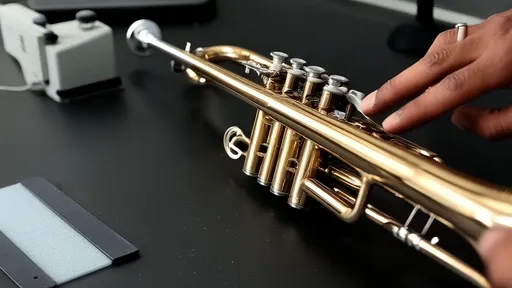
For generations, the primary tool for diagnosing these faults was the feel test or the light test. A technician would gently press a key and feel for the subtle cushion of air resistance that confirms a good seal or listen for the faintest click of the pad hitting the rim of the tone hole. Alternatively, they might shine a bright light into the bore of the instrument from the bell end while observing the tone holes in a dark room; any sliver of light escaping from under a closed pad was a definitive sign of a leak. While these methods are still valuable for a trained expert, they are highly subjective, require a keen sensory perception, and are less effective for detecting very small or inconsistent leaks.
The evolution of technology has ushered in more precise and objective methodologies. The most significant advancement has been the adoption of the pressure decay testing system, often referred to as a leak detector. This apparatus typically consists of a custom-fitted stopper for the instrument's bell or mouthpiece, a sensitive pressure sensor, a regulated air pump, and a digital display. The technician seals the instrument and uses the pump to inflate it to a low, standardized pressure. The system then monitors the internal pressure over a set period. A perfectly sealed instrument will maintain a steady pressure, while any drop is quantitatively measured and directly indicates a leak. The precision of this method allows technicians to not only confirm the presence of a leak but also to quantify its severity, a crucial factor in prioritizing repairs.
Another sophisticated technique involves the use of smoke machines. A non-toxic, odorless vapor is gently introduced into the sealed body of the instrument. With all keys closed, the technician can then visually trace the path of any escaping smoke, which pinpoints the exact location of even the most minuscule leak. This method provides an immediate and undeniable visual confirmation, making it an excellent tool for both diagnosis and for educating instrument owners about the nature of the problem they are experiencing.
For the working musician without access to a full repair bench, a simpler yet effective method is the suck test. The player closes all the keys in a specific sequence—often starting from the bottom of the instrument and working upwards—and attempts to draw air through the mouthpiece. If a vacuum sensation is created and held, the seals are likely good. If air can be sucked through, a leak is present in the closed key circuit. This test requires practice to interpret correctly but remains a valuable first-line diagnostic tool on the go.
The process of fixing a identified leak is a craft in itself. It is rarely as simple as tightening a screw. The solution depends on the root cause. Often, the issue is a misaligned key. This requires careful bending of key rods to ensure the pad seats squarely on the tone hole without rocking. Other times, the pad itself is old, hardened, or torn and must be replaced—a task that demands a selection of precision shims to set the correct key height and a heat-controlled iron to seat the new skin or pad perfectly. In some cases, debris or a small dent on the tone hole rim is the culprit, requiring meticulous cleaning or metalworking to restore a flat surface.
The implications of rigorous leak testing extend far beyond the repair shop. For music educators, understanding this principle is vital. A student struggling with sound production on a school-owned instrument may not be lacking in ability but may be fighting against a faulty apparatus. Teaching students basic diagnostic skills, like the suck test, empowers them to identify potential equipment problems early. For the professional musician, the ability to quickly verify the integrity of their instrument before a performance or recording session is indispensable for peace of mind and artistic consistency.
In conclusion, the detection of key leaks in wind instruments represents a critical intersection of traditional craftsmanship and modern technology. From the simple suck test to sophisticated digital pressure analyzers, the goal remains unchanged: to achieve the perfect seal that allows the musician's breath to be transformed into pure, resonant music unimpeded. This ongoing pursuit ensures that the technical foundation of the instrument remains transparent, allowing the art of the performer to shine through without obstruction.

By /Aug 22, 2025

By /Aug 22, 2025

By /Aug 22, 2025

By /Aug 22, 2025

By /Aug 22, 2025
By /Aug 22, 2025
By /Aug 22, 2025

By /Aug 22, 2025

By /Aug 22, 2025

By /Aug 22, 2025

By /Aug 22, 2025

By /Aug 22, 2025

By /Aug 22, 2025

By /Aug 22, 2025

By /Aug 22, 2025
By /Aug 22, 2025
By /Aug 22, 2025

By /Aug 22, 2025
By /Aug 22, 2025
By /Aug 22, 2025
