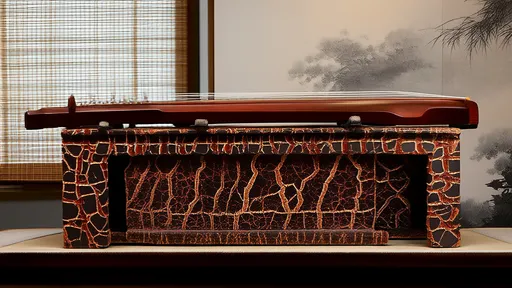
In the hushed world of ancient instrument conservation, few challenges are as delicate and consequential as addressing the intricate network of cracks that grace the surface of a centuries-old guqin. These are not mere flaws to be eradicated; they are a palimpsest of the instrument's history, each fissure whispering tales of climate, use, and the passage of time. The approach to their treatment is therefore not one of simple repair but of profound reverence, a meticulous dance between preservation and stabilization.
The philosophy guiding modern conservators is one of minimal intervention. The goal is never to make the instrument appear new. Such an endeavor would be a form of historical erasure, stripping the guqin of its unique character and accrued wisdom. Instead, the primary objectives are to halt the progression of existing cracks, prevent the formation of new ones, and ensure the structural integrity of the soundboard, all while altering the original material as little as possible. This respect for the artifact's life story defines every step of the process.
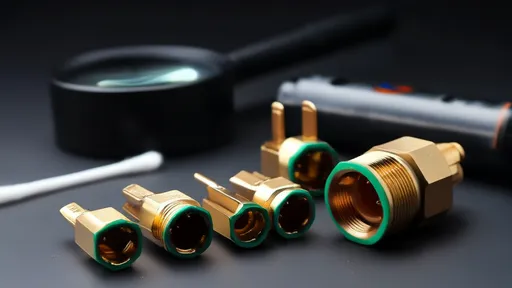
It all begins with a diagnosis so thorough it borders on the medical. Conservators employ a suite of non-invasive techniques to peer beneath the surface. High-resolution digital microscopy reveals the minutiae of each crack's path and depth. Multispectral imaging can sometimes uncover previous, hidden repairs or variations in the lacquer composition. Gentle tapping and listening for changes in acoustic response help assess whether a crack has compromised the structural resonance of the wood beneath. This period of assessment is critical, as it informs every subsequent decision.
Understanding the root cause is paramount. Cracks in guqin lacquer are rarely random; they are a direct response to environmental stress. The primary antagonist is fluctuating relative humidity. The wood core of the guqin expands and contracts with changes in moisture in the air, while the lacquer surface is far less dimensionally stable. This differential movement creates immense tension, eventually causing the brittle lacquer to fracture. Temperature shifts and physical impacts contribute as well, but humidity remains the master puppeteer. Therefore, a long-term stabilization plan is inseparable from providing the instrument with a permanently stable environment.
For active, unstable cracks that threaten to widen or lengthen, a process known as consolidation is often the first step. This involves the introduction of a stabilizing adhesive directly into the crack itself. The choice of adhesive is a subject of deep consideration and debate. Traditional materials, such as refined animal glues, are prized for their reversibility and compatibility with ancient materials. However, modern synthetic resins, specifically those designed for conservation, offer superior aging properties and strength. The application is a feat of precision, often using micro-syringes under magnification, ensuring the adhesive wicks into the deepest part of the fissure without overflowing onto the surrounding original lacquer.
Following consolidation, the question of filling arises. Not every crack receives a fill; the decision is made on a case-by-case basis. The purpose of filling is often structural or aesthetic, to plane the surface or prevent dust accumulation. When done, the material used must be softer than the original lacquer to avoid creating stress points. Custom-mixed fills, using materials like beeswax mixed with pigments and inert fillers, are common. The artistry lies in mimicking the exact colour and opacity of the surrounding aged lacquer, a skill that separates master conservators from the rest. The fill is always applied slightly below the surface level, never proud of it, acknowledging its role as an addition rather than a replacement.
The final and most visually critical stage is inpainting, or retouching. This is where the conservator's skill as an artist is fully displayed. The goal is to visually integrate the treated crack with the surrounding patina, making the repair detectable only upon extremely close inspection. Using fine brushes and stable, reversible pigments, the conservator carefully paints over the fill material, replicating the complex colours, textures, and even the slight gloss of the original finish. This step requires an intimate understanding of historical lacquer techniques and an empathetic eye for the instrument's aesthetic unity.
Underpinning all these physical treatments is the unwavering principle of reversibility. Every material applied today must be removable by conservators of the future without damaging the original substance of the guqin. This ethical cornerstone ensures that our current treatments do not foreclose future options or better techniques that may be developed. It is an acknowledgment that conservation is a field in constant evolution and that we are merely temporary stewards of these cultural treasures.
Ultimately, the treatment of cracks on a guqin is a profound metaphor for the conservation ethos. It is not a battle against age and decay, but a collaboration with it. The cracks are accepted, stabilized, and gently coaxed into the instrument's ongoing narrative. The result is a guqin that retains its soul—its voice, its history, and its visible journey through time—while being granted the strength to continue its song for generations to come. The conservator's hand is meant to be invisible, their success measured by the instrument's enduring authenticity.
By /Aug 22, 2025
By /Aug 22, 2025

By /Aug 22, 2025
By /Aug 22, 2025

By /Aug 22, 2025
By /Aug 22, 2025
By /Aug 22, 2025
By /Aug 22, 2025

By /Aug 22, 2025
By /Aug 22, 2025
By /Aug 22, 2025

By /Aug 22, 2025

By /Aug 22, 2025
By /Aug 22, 2025
By /Aug 22, 2025
By /Aug 22, 2025
By /Aug 22, 2025
By /Aug 22, 2025
By /Aug 22, 2025
By /Aug 22, 2025
